Mahmoud Muhammad Taha: A neglected Sudanese Sufi thinker and his significance today
Book presentation and panel discussion
- Date
- 15 April 2026
- Time
- 20:00 -21:30
- Location
- BG 3
- Room
- VOX-POP
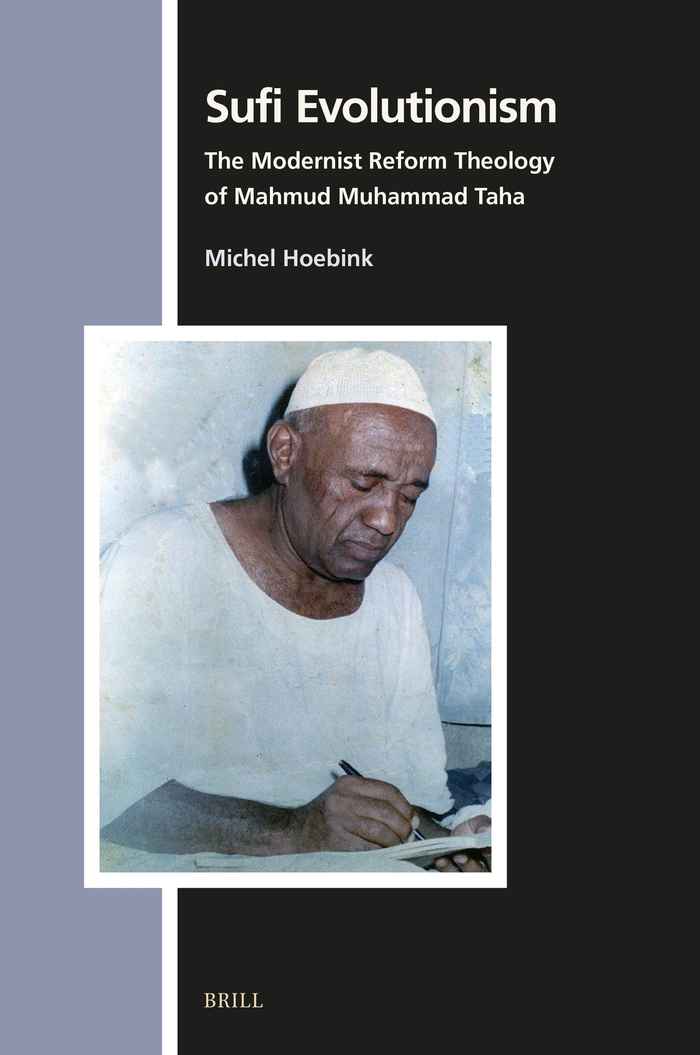
Mahmud Muhammad Taha was a Sudanese thinker and activist who led a small group of Muslim reformers in the 1960s and 70s. He developed what he called the Second Message of Islam: a new way of understanding the Qur’an that supports ideas such as democracy and equal rights for women and non-Muslims. In 1985, under Sudan’s Islamic law, Taha was convicted of apostasy and executed.
In his recent book Sufi Evolutionism, Michel Hoebink explores the lesser-known mystical theology behind Taha’s work. Drawing on medieval Sufi thought, this approach sees the Qur’an as a historical text, suggesting that some parts were relevant for the seventh century and may not apply in the same way today.
During this event, Hoebink and a panel of speakers will discuss Taha’s ideas, why they still matter, and how they relate to current developments in Sudan. After a short introduction by the author, panel members Liana Saif, Imad Babikir, Steve Howard, and Maaike Voorhoeve will address different aspects of Taha’s thought. The evening will end with an interactive Q&A.
This event is made possible by VOX-POP, SPUI25 and the Global Islam Research Group (ASH-UvA)
Programme overview
20.00 - 20.05 Main introduction by moderator Dženita Karić
20.05 - 20.10 Michel Hoebink introduces his book
20.10 - 21.00 Panel discussion
21.00 - 21.30 Interactive Q&A
Practical information
This event takes place at VOX-POP (Binnengasthuisstraat 9), ground floor. Entry is free and open to everyone, however, we do kindly ask you to registrate.
Speakers
Michel Hoebink is an independent researcher and journalist whose interest in the Sudan goes back to the early 1980s. He studied Arabic and worked at the department of science of religion at Utrecht University, as well as for the Arabic desk of Radio Netherlands Worldwide.
Imad Babikir is a non-violence civil society activist and human rights defender from Sudan, currently based in the Netherlands. In the 1980s, while working as a manager in flight catering services for Sudan Airways, he was active in the Sudanese trade union movement. During this time, he also became involved in Republican movement Sudan, founded by Mahmud Muhammad Taha.
Steve Howard is a retired professor of African and Islamic Studies at Ohio University, who has written extensively on Sudan. He has been a follower of Mahmoud Mohamed Taha since 1982. His 2016 book Modern Muslims is an inside look at the history and social organization of the Republican Brotherhood.
Liana Saif is Assistant Professor in the History of Esotericism in the Middle Ages at the Centre for the Study of Hermetic Philosophy and Related Currents at the University of Amsterdam. Her research focuses on Islamic esotericism and the occult sciences, with particular attention to how esoteric knowledge circulated between the Islamic world and Latin Europe.
Maaike Voorhoeve is an assistant professor in the Department of History, European Studies and Religious Studies (UvA) and a member of the Modern history section of the Amsterdam School of Historical Studies. She specialises in law and gender in the Muslim world, with a focus on North Africa.
Dženita Karić is Assistant Professor in Religious Studies and Cultural Heritage at the Department of History, European Studies and Religious Studies at the University of Amsterdam. Her work focuses on histories of religious practices in the Balkans, with a particular focus on pilgrimage, food, and rural religion.